
GreatLakesCruises.com is a sales agent for every cruise line that operates on the Great Lakes.


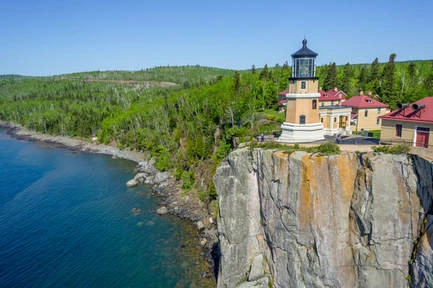
In November 1905, a major storm on Lake Superior damaged over two dozen ships who were unable to find their way safely into the harbor. The American company U.S. Steel, which ferried tons of iron ore from Superior down to industrial centers like Detroit and Cleveland each year, lobbied the U.S. Government for a light station and a fog signal to prevent future losses. Split Rock Lighthouse was constructed in 1910 by the U.S. Lighthouse Service. Originally accessible only by water, this lighthouse became a favorite tourist spot after the Lake Superior International Highway was completed in 1924. Split Rock Lighthouse was one of the most visited lighthouses in the US until its closing in 1969. It remains a historic landmark, maintained by the Minnesota Historical Society since 1976.
The Great Lakes boast over 200 active lighthouses guiding ships around the nearly 11,000 miles of coastline. Many more lights have gone dark but remain a testament to the vibrancy of local communities, businesses and governments who have navigated the Great Lakes over the centuries. Explore some of the most interesting of these Great Lakes Lighthouses below.
Read more history and plan your visit at the Minnesota Historical Society’s official Split Rock Lighthouse website.
The Apostle Islands dot the coastline of the southern shore of Lake Superior. Their lighthouses guided ships through the maze of islands into the port at Bayfield, Wisconsin.
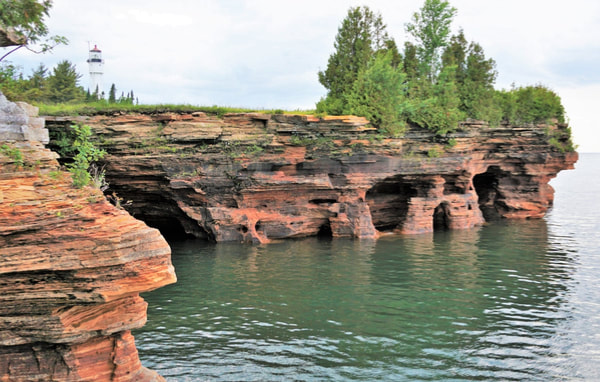
Raspberry Island Lighthouse was constructed between 1861 and 1863, during the US Civil War. Henry Rice, the founder of Bayfield, Wisconsin lobbied for a light to guide ships into the new port, and President Buchanan ordered its construction in 1859. On completion, the Raspberry Island Light was called “The Showplace of the Apostle Islands.” Raspberry Island, protected as a federal preserve, is one of the few islands to retain its old-growth forest. Learn more about the history of the Raspberry Island Lighthouse.
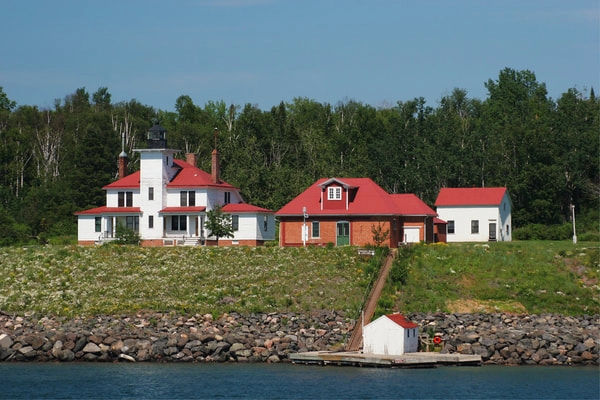
“When a woman marries a lighthouse keeper, she gives up everything else in the world.” Read about the lonely lives of Apostle Island light keepers’ wives at the National Park Service’s History and Culture series blog.
If quiet time as a lightkeeper sounds like a pleasure rather than a pain, you can volunteer to be a light keeper at one of the Apostle Islands National Lakeshore lighthouses.
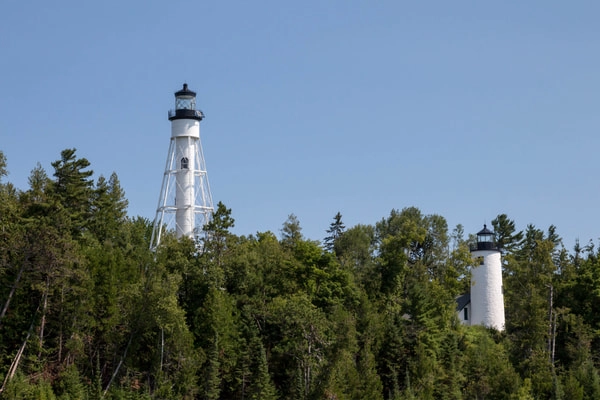
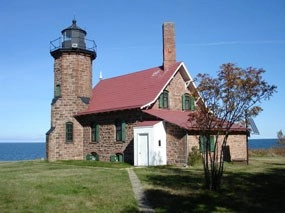
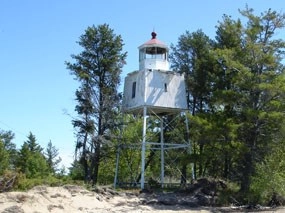
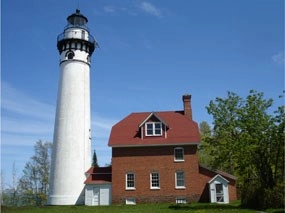
The Michigan Island Lighthouses have an odd history. The Old Light was originally meant for Long Island in the Apostles, but a last minute change by the Lighthouse Service brought the rough stone tower to Michigan Island instead. Lit in 1857, the Old Light closed within a year, and the Long Island Light built instead. In 1869, the Old Light was restored and remained in operation until 1920s, when a taller lighthouse was required. Rather than build the New Light from scratch, the Lighthouse Service removed the discontinued Schooner’s Ledge Light from Pennsylvania to Wisconsin. Assembled in 1929, the New Light was the tallest light in Wisconsin at the time.
The Sand Island Lighthouse was built in 1881, guiding commercial and passenger ships to port. While many of the Apostle Islands were uninhabited in the 19th and 20th century, Sand Island had a population of over 100 fishermen and farmers, mostly of Norwegian descent. Emmanuel Luick, the lighthouse keeper from 1892 to 1921, wrote: “Sand Island was just like home…there we felt free with the wind and the sun and plenty of open spaces.” When the Sand Island Lighthouse was automated in 1921, Luick was transferred to the Grand Marais, Minnesota Light.
Explore more of the Apostle Island Lighthouses:
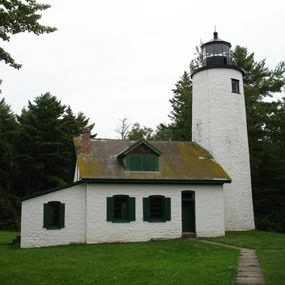
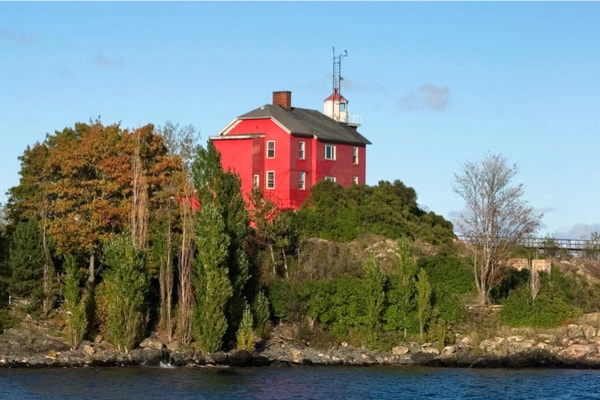
Read more about the Marquette Lighthouse and plan your visit at the Marquette Maritime Museum and Lighthouse website.
“I was the only human being for whole months, monarch of all I surveyed.” – Keeper Alexander McLean, Michigan Island Light, Lake Superior
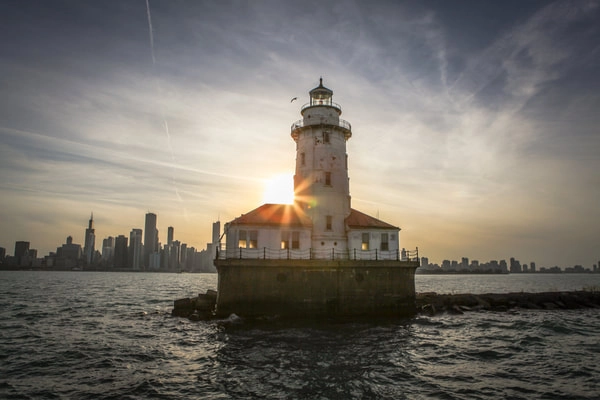
Chicago Harbor Lighthouse, Chicago, Illinois, USA
Fort Gratiot Lighthouse, Port Huron, Michigan, USA
Adventure on a one-of-a-kind kayaking experience where you can literally kayak so close to the rock formations that you can reach out and touch them. The kayaks are 18ft long Looksha tandem kayaks that require two participants in order to paddle.
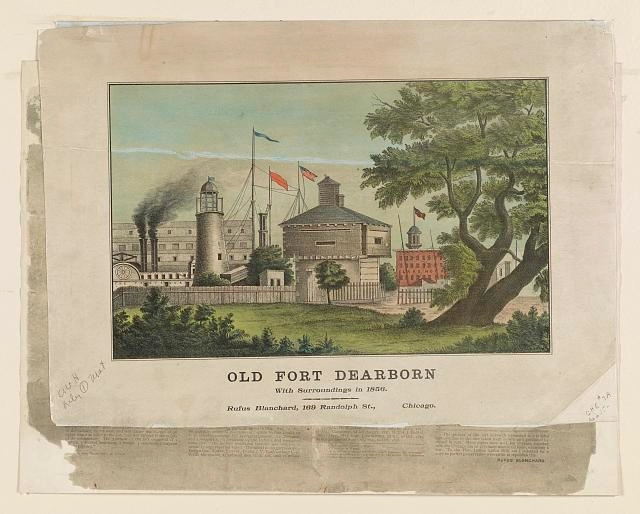
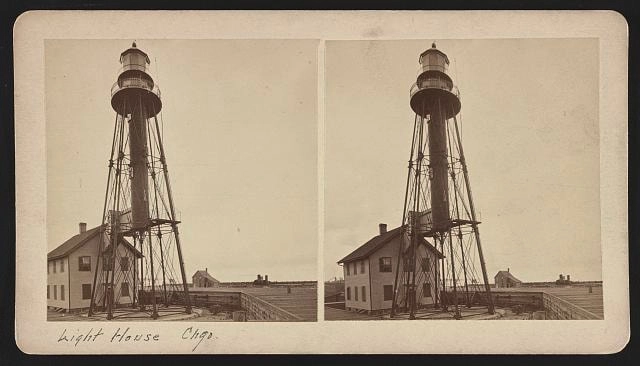
Read more about the history of Chicago Harbor Lighthouses at the Chicago Maritime Museum website.
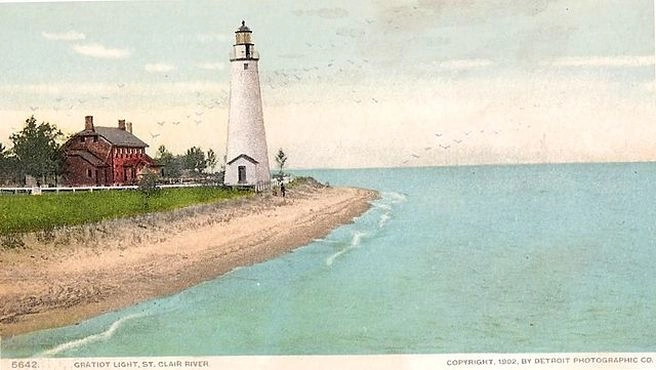
Postcard of Fort Gratiot Lighthouse, ca. 1902
The Fort Gratiot Lighthouse was the first lighthouse built on Lake Huron, strategically placed at Fort Gratiot where water from Lake Huron pours into the St. Clair River. Sadly, the first lighthouse at this location was poorly built and succumbed to a storm in 1828, much to the delight of its keeper George McDougall who hated the nightly ascent up steep stairwells and through a 21-inch trap door. Funds for a new Fort Gratiot Lighthouse were approved the following year. The new tower was over 60 feet high and included a steam fog whistle to warn ships of impending fog on the river. The Fort Gratiot Lighthouse has lasted through the countless heavy storms of Lake Huron for over 180 years. After the Coast Guard closed the lighthouse in 2004, it was purchased by St. Clair County and restored by the Port Huron City Council, opening to the public in 2012.
Read more about the history of the Fort Gratiot Lighthouse at Kraig Anderson’s Lighthouse Friends website.
Plan your visit at the Port Huron Museum website.
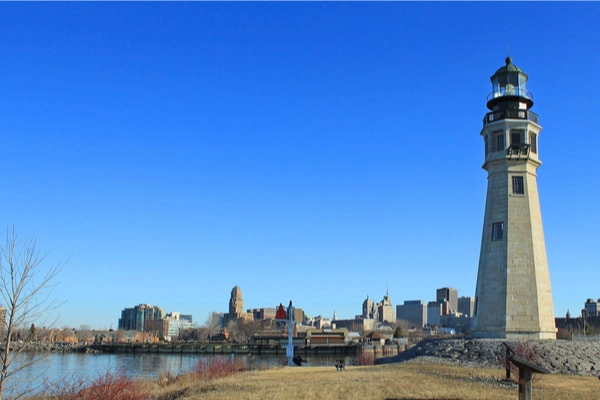
Postcard of Fort Gratiot Lighthouse, ca. 1902
Buffalo, New York was the location of one of the earliest lighthouses built by the United States on the shores of the Great Lakes. Conceived as early as 1805–when Buffalo was recognized as an important entry port for the young country–the Buffalo Main Light was constructed in 1819. Over the next decade, Buffalo grew from a sleepy frontier town into a bustling city, a crossroads for ships on the newly-built Erie Canal, the Niagara River, and Lake Erie. By 1837, its port served 300 sailing vessels and 40 steamboats. A new Buffalo Lighthouse was constructed in 1833, at a height of 40 feet to rise above the smoke of the city. The 1833 Buffalo Light is the oldest building in Buffalo still standing on its original foundation.
Read more and plan your visit at the Buffalo Lighthouse Association’s official Buffalo Lighthouses website.
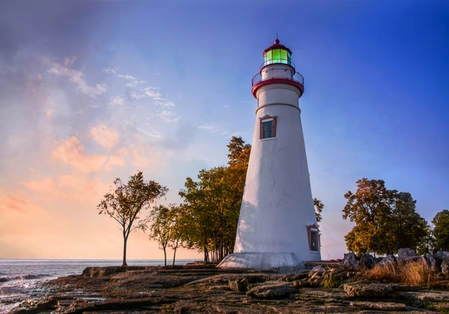
Postcard of Fort Gratiot Lighthouse, ca. 1902
Read more and plan your visit at the Marblehead Lighthouse Historical Society’s official Marblehead Lighthouse website.
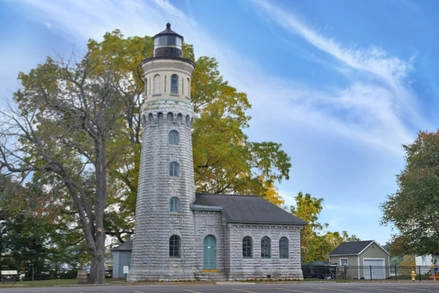
Postcard of Fort Gratiot Lighthouse, ca. 1902
Read more about the history of the Old Fort Niagara Lighthouse at Kraig Anderson’s Lighthouse Friends website.
Plan your visit at the Old Fort Niagara official website.
Postcard of Fort Gratiot Lighthouse, ca. 1902
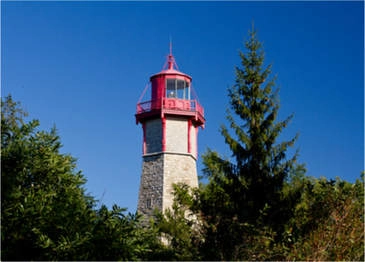
Love a good ghost story? Learn more about the haunting of Gibraltar Point Lighthouse in this 1958 report from Canada’s CBC NewsMagazine.
Read more about the Gibraltar Point Lighthouse at Kraig Anderson’s Lighthouse Friends website.
Explore the history of the Toronto Islands and plan your visit to the Gibraltar Point Lighthouse on Centre Island at the City of Toronto’s Parks website.
Rock Island Lighthouse, 1000 Island Region can be accessed through Clayton, New York, USA
Crossover Lighthouse, on the NY Seaway can be accessed through Clayton, New York, USA